
Private tutor or AI: what's worth it for SAT prep?

The question parents are asking is whether their child needs a human tutor, or whether an AI tool can do the job. The honest answer is that they do different things, and neither one fully replaces the other.
AI is excellent at certain parts of test prep and unreliable at others. Human tutors provide something AI genuinely cannot. The most effective preparation often uses both, but understanding what each one is actually good for is the first step.
What AI does well
Explaining concepts. If a student doesn't understand a grammar rule or gets confused by a math concept, AI can break it down step by step, try a different explanation when the first one doesn't click, and answer follow-up questions. For on-demand concept review, this kind of conversational explanation is a real strength.
Reviewing wrong answers. When a student misses a question, AI can walk through why the correct answer is correct, diagnose the specific misconception that led to the wrong choice, and connect the error to a broader concept. This is one of the highest-value uses of AI in test prep: turning a missed question into an actual learning moment.
Researching colleges and SAT policies. AI tools are useful for exploring schools, comparing programs, understanding a school's test score requirements, looking up whether a school superscores, and getting a sense of how SAT scores factor into merit aid at different institutions. These are information-retrieval tasks where general accuracy matters more than precision, and AI handles them well.
Learning about test-taking strategy. Students can ask for tips on pacing, when to skip and come back, how to approach different question types, or when it's faster to use Desmos versus working by hand. AI can provide useful strategic guidance, especially for students who haven't been exposed to these ideas before.
What AI is not good for
Generating practice questions. This is where AI looks most helpful and is most dangerous. A general-purpose AI can produce something that resembles an SAT question while being wrong on the concept tested, the difficulty level, or the wording conventions. It sounds right. It looks right. But it isn't representative of the actual test.
In early 2026, Google Gemini and The Princeton Review launched AI-generated SAT practice tests. Test prep experts who evaluated them found math questions on concepts not tested on the SAT (imaginary numbers, logarithms, the law of cosines), Reading and Writing questions in the wrong order and proportions, missing question types, broken difficulty calibration, and no Bluebook tools. A student who practiced heavily with that material would calibrate their skills and pacing to a test that doesn't exist.
The same applies to any AI tool that generates quizzes or practice sets on the fly. Unless the questions were created by people who know the test deeply, they won't match the real SAT's content, structure, or difficulty. Practicing with bad questions is worse than not practicing at all, because it builds false confidence in the wrong skills.
What a private tutor provides
A tutor does things that no AI tool can, because most of what makes tutoring valuable isn't content delivery. It's everything that surrounds the content.
Accountability and scheduling. A student with a standing Tuesday session with a tutor will study on Tuesday. A student with access to an app may or may not open it. Tutors create a cadence that keeps prep moving forward, especially for students who are balancing AP courses, sports, and a social life. They help students find time in weeks that feel impossibly full and build a study plan that fits their specific calendar.
Coaching and strategy. A good tutor doesn't just teach math and grammar. They observe how a student takes the test and diagnose problems that aren't about content at all. Is the student rushing through the first module and making careless errors? Spending too long deliberating between two answer choices? Freezing when they see a question type they don't recognize? These are behavioral patterns that a tutor can see and address in real time.
Encouragement and belief. Some of the most valuable work a tutor does isn't instructional. It's helping a student who thinks they're bad at math realize they're not, that the concept makes sense when explained right, and that their dream score is genuinely within reach. Research on tutoring has found that students ask roughly 26 questions per hour in a one-on-one setting, compared to about one question every five hours in a classroom. That level of engagement changes how students feel about their own ability. The students who most need to hear "you can do this" rarely believe it until a real person shows them why.
Motivation and perspective. A tutor can connect the daily grind of studying to something the student actually cares about. For some students, that's getting into a specific school. For others, it's qualifying for merit scholarships that make college affordable. For others, it's just wanting to prove to themselves that they can do it. AI doesn't know what motivates a specific student. A tutor does, and they use it.
Attention to the whole student. Tutors notice when something is off. They can tell when a student is anxious, exhausted, or checked out, and they adjust accordingly. They know when to push harder and when to back off. They serve as a sounding board for the stress of the whole college process, not just one test. None of this shows up in a practice question.
How Sharp combines both
Sharp's questions are created by experts to reflect the actual structure, difficulty, and content of the real digital SAT. The AI tutor works on top of that foundation: when a student gets a question wrong, it diagnoses the mistake, explains the concept, and walks through how to apply it. It knows when Desmos is faster than working by hand, and when it isn't.
For many students, working independently with Sharp is where they start to feel in control of their prep. They see what they're getting wrong, they understand why, and they start to close gaps on their own. That sense of progress often leads students to seek out tutoring for the remaining areas where they're stuck, which makes the tutoring sessions more focused and more efficient. The tutor isn't starting from scratch. They're building on a foundation the student has already laid.
Sharp also offers direct access to tutors for students who want that support, so the transition from self-study to guided help is seamless.
Sharp is built for every student, no matter their starting point — personalized prep at a price that makes sense. getsharp.app
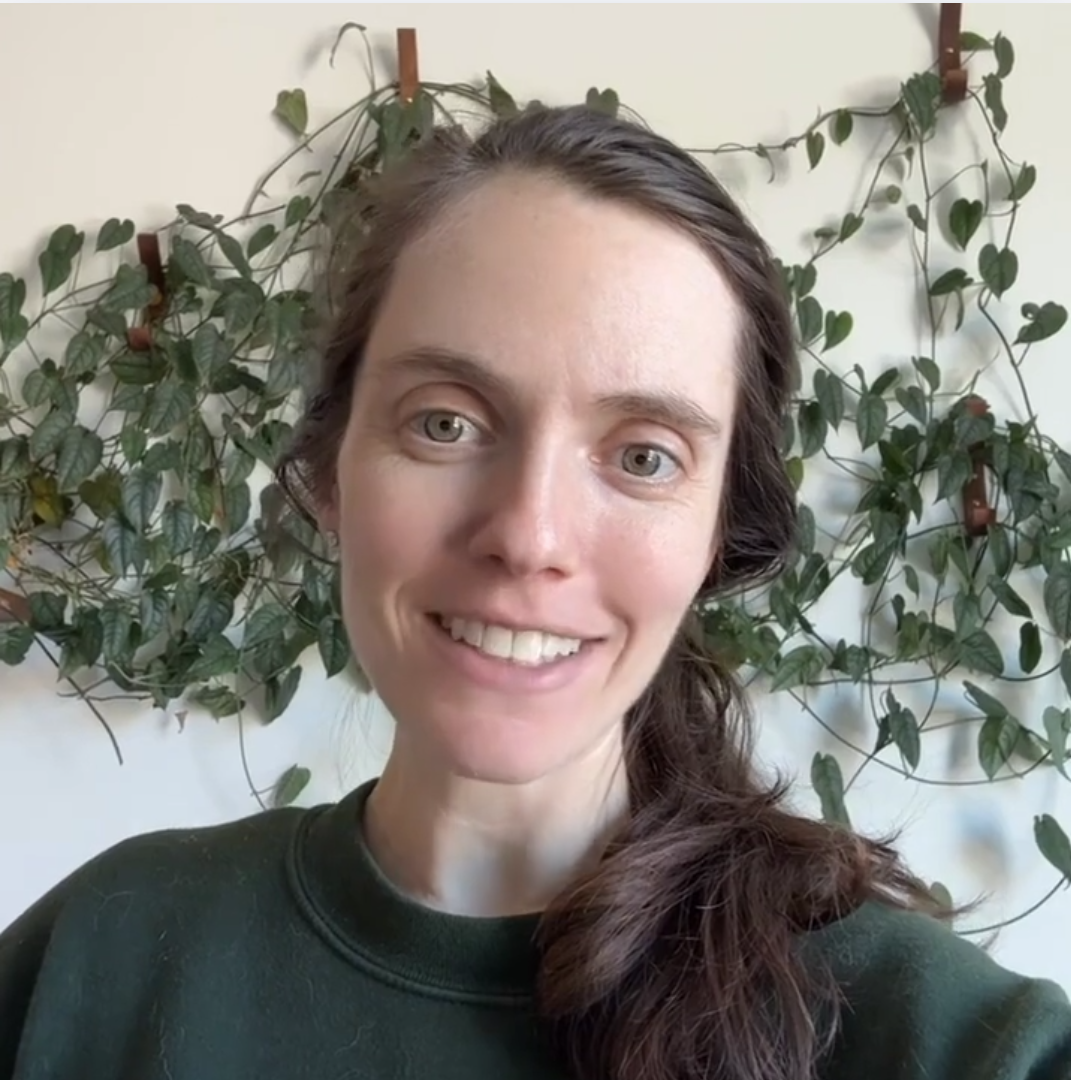
SAT Tutor & Co-founder
Kim scored a perfect 1600 on the SAT and graduated summa cum laude from Dartmouth. She's spent years tutoring students and helping them get into top colleges. After working as a software engineer at Apple and Airbnb, she founded Sharp to bring high-quality, personalized SAT prep to every student.